Property Identification
Comprehensive identification services for replacement properties across all 50 states.
Learn More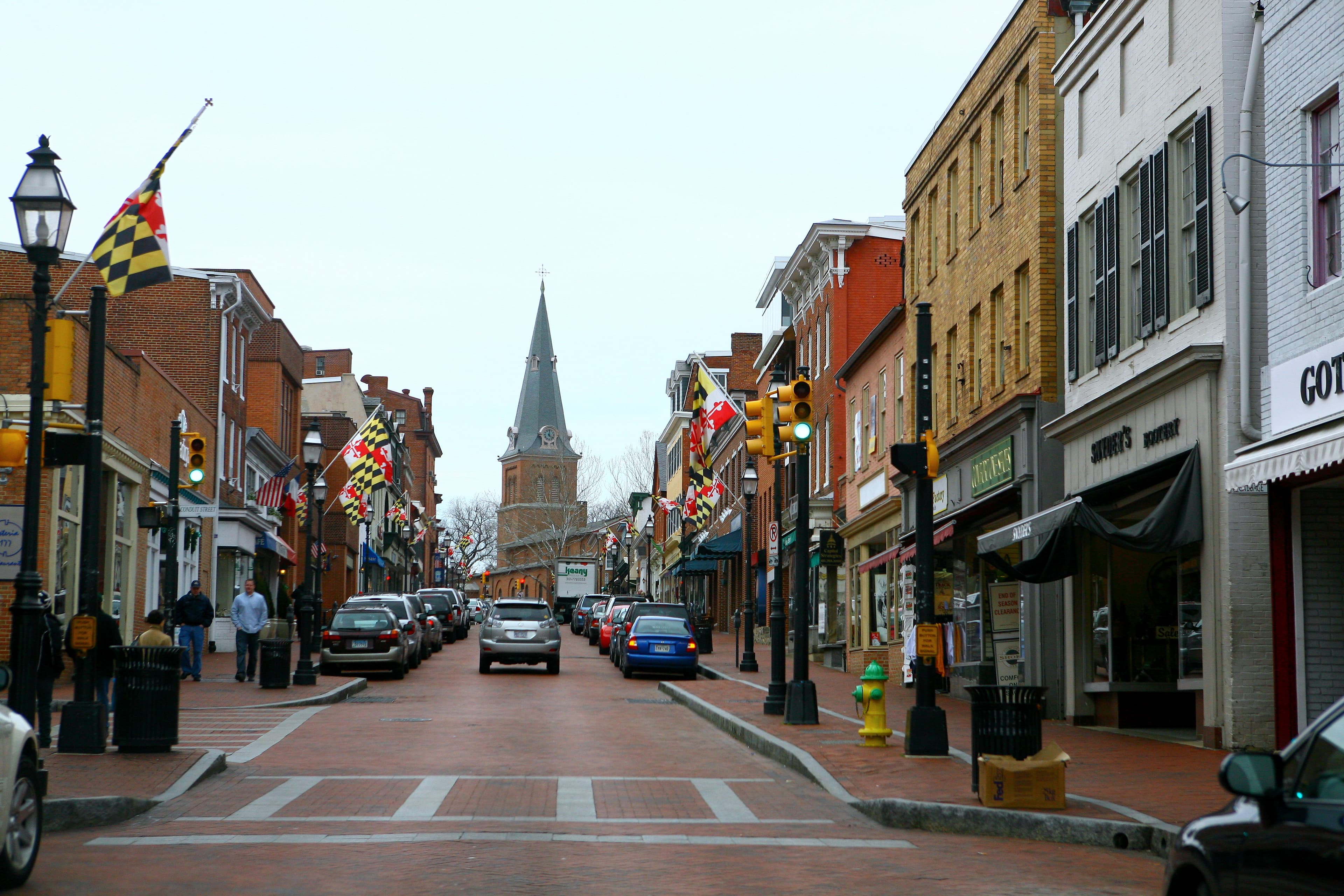
Maritime service, civic anchors, and experiential retail with long leases. Annapolis provides stable tenant rosters and predictable income streams for 1031 exchange replacement property selection.
We help investors identify replacement properties in Annapolis, MD and nationwide markets. Our identification process includes property research, tenant credit screening, lease analysis, and compliance verification to ensure every property meets IRS 1031 exchange requirements.
Whether you are looking for single tenant triple net lease retail properties with corporate-guaranteed leases from investment-grade tenants, shopping centers, multifamily, industrial, or other property types, we provide curated property briefs within the 45-day identification window. Our team identifies absolute NNN properties (where tenants assume all expenses), regular NNN leases, and ground lease opportunities, coordinating with qualified intermediaries and providing documentation support to ensure compliant identification.
As Maryland's state capital and home to the Naval Academy, Annapolis draws a different kind of replacement buyer than the industrial and office submarkets further up the I-95 corridor. Historic downtown retail near City Dock, office serving state-government-adjacent tenants, and hospitality-adjacent commercial property all trade here, and each carries diligence questions that have almost nothing to do with each other.
Anything near the Chesapeake Bay waterfront or City Dock should be reviewed for flood zone designation and flood insurance cost before it goes on an identification list, not after — insurance premiums on waterfront-adjacent commercial property can move the operating expense projection enough to change whether a property still pencils as a fair-value replacement. A coordination service that skips this step to keep the fee simple is passing real risk on to the investor.
Historic district rules in downtown Annapolis also restrict exterior alterations and signage in ways that can affect a retail tenant's ability to rebrand or renovate, which matters if you are underwriting future re-leasing risk on a downtown retail parcel.
Lenders sometimes treat historic-district retail differently because of the alteration restrictions, and a property that looks straightforward on a broker's package can hit a snag in underwriting once the lender's counsel reviews the historic preservation overlay. Getting lender preflight started as soon as an Annapolis property is under serious consideration — not after identification — keeps that risk from eating into your 180-day exchange period.
Maryland's General Assembly convenes in Annapolis every January through April, and that seasonal population of legislators, staff, and lobbyists puts a real, temporary lift into hospitality-adjacent retail and short-term office demand near State Circle that does not repeat the rest of the year. A restaurant or retail rent roll pulled during session looks meaningfully stronger than one pulled in August, and an investor underwriting occupancy or percentage-rent income off a spring snapshot is working from an inflated baseline. The same seasonality shows up around Naval Academy commissioning week and the spring and fall boat shows at City Dock, when hospitality-adjacent retail sees a similar short-term spike.
None of this makes Annapolis retail unstable — it makes it seasonal in a way a generic coordination quote will not flag. A trailing twelve-month operating statement, not a single quarter, is the only reliable way to separate session-driven and event-driven revenue from a property's baseline performance before it goes on an identification list.
Office space serving state-government-adjacent tenants — lobbying firms, association offices, contract attorneys — tends to hold longer leases than the retail stock nearby, since these tenants value proximity to State Circle enough to renew rather than relocate for modest savings. That stability is real, but it is not automatic.
Annapolis also sits inside Anne Arundel County's tax structure, which differs from Baltimore City, Baltimore County, and every other jurisdiction in this metro. An investor moving equity out of a Baltimore City office asset into an Annapolis government-adjacent building should have that specific parcel's current assessment pulled and compared line by line, not estimated from a countywide average included in a marketing package.
Parking is the other quiet variable on downtown Annapolis office and retail, where the historic street grid predates any expectation of on-site parking and most tenants rely on municipal garages and metered street spaces. A retail or office tenant's willingness to renew can hinge on nearby garage availability and rates, and a replacement buyer underwriting a City Dock-area building should understand that parking constraint as part of the tenant-retention picture rather than assuming it away.
Comprehensive identification services for replacement properties across all 50 states.
Learn MoreTriple net lease property identification with tenant credit screening and lease analysis.
Learn MoreShopping center and retail strip identification for 1031 exchange replacement properties.
Learn MoreApartment building and multifamily property identification for 1031 exchanges.
Learn MoreMany waterfront-proximate parcels do fall within a flood zone designation, and confirming that status and the associated insurance cost should happen before identification, since it affects the operating expense projection.
Yes, exterior alteration and signage restrictions in the historic district can limit what an incoming tenant is able to change, which is worth factoring into any assumption about future re-leasing flexibility.
It can be, since that tenant base tends to renew steadily, but lease terms and tenant improvement allowances should still be reviewed individually rather than assumed based on the tenant category alone.
Some do, given the preservation overlay's restrictions on alterations, so starting lender preflight conversations early avoids finding out mid-exchange that expected financing terms do not fit the property.
Flood insurance premiums are the item most often left out of an initial pro forma, and they can be significant enough to change whether the property still works as a fair-value replacement.
Contact us to discuss your 1031 exchange property identification needs in Annapolis, MD.